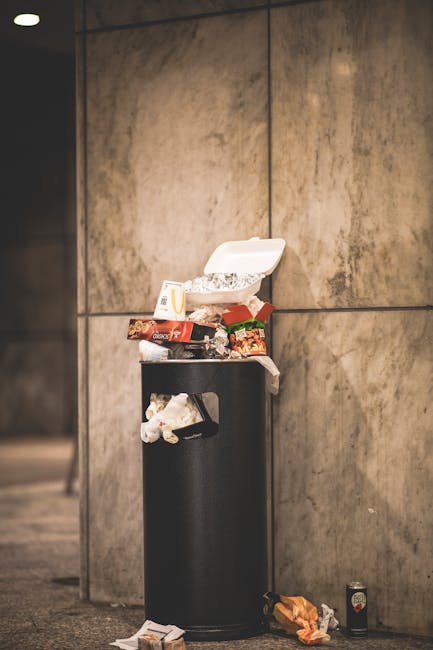
What to know about City of London rubbish disposal rules
If you live, work, or manage property in the City, rubbish disposal can feel more complicated than it should. One minute you are clearing a small office cupboard; the next, you are trying to work out what counts as commercial waste, what can be recycled, and why the wrong sack on the pavement can cause problems. That is exactly why What to know about City of London rubbish disposal rules matters. The rules are there to keep streets tidy, reduce fly-tipping, and make sure waste is handled properly - but the day-to-day reality is a bit more nuanced.
In this guide, we break it down in plain English. You will get the essentials, the common mistakes, the compliance basics, and the practical steps that make disposal easier. Nothing mystical here. Just the kind of useful detail that saves time, avoids hassle, and helps you make a sensible decision.
Table of Contents
- Why What to know about City of London rubbish disposal rules Matters
- How What to know about City of London rubbish disposal rules Works
- Key Benefits and Practical Advantages
- Who This Is For and When It Makes Sense
- Step-by-Step Guidance
- Expert Tips for Better Results
- Common Mistakes to Avoid
- Tools, Resources and Recommendations
- Law, Compliance, Standards, or Best Practice
- Options, Methods, or Comparison Table
- Case Study or Real-World Example
- Practical Checklist
- Conclusion
- Frequently Asked Questions
Why What to know about City of London rubbish disposal rules Matters
The City of London is small in area, but it is dense, busy, and very particular about how waste is managed. Offices, restaurants, flats, retail units, and construction projects all create different kinds of rubbish, and the rules around collection and disposal are designed to keep shared spaces usable. That means timing, presentation, sorting, and the chosen disposal method all matter more than many people expect.
Let's face it: waste is one of those things people only notice when it goes wrong. A missed collection, a bag left out too early, or a load that includes prohibited items can quickly become a visible issue. In a place like the City, that visible issue is not just inconvenient. It can affect neighbours, building managers, contractors, and your own reputation.
There is also a practical business reason to pay attention. Correct disposal can reduce unnecessary charges, lower contamination in recycling, and help you avoid emergency clearances. If you have ever dealt with a cramped loading bay on a rainy Monday morning, you will know how fast a minor rubbish problem becomes a bigger one. One bag turns into three. Then a chair. Then a box of old files nobody wanted to own. You know the drill.
Expert summary: The safest approach in the City is to treat rubbish disposal as a managed process, not an afterthought. Know what you have, separate it properly, use the right route for the waste stream, and keep records where needed.
How What to know about City of London rubbish disposal rules Works
At a practical level, rubbish disposal in the City usually falls into a few broad categories: household waste, commercial waste, recyclable materials, bulky items, construction debris, and specialist streams such as electricals or hazardous waste. The exact route depends on who created the waste, what the waste is, and whether it needs special handling.
For households, the emphasis is usually on correct set-out, keeping waste in the right containers, and separating recycling from general rubbish where required. For businesses, the bigger issue is duty of care: you need to make sure waste is stored safely, transferred to authorised handlers, and documented appropriately. For builders and fit-out teams, weight, access, skips, and load restrictions tend to matter a lot more than people realise.
In many situations, the simplest answer is not the cheapest-looking one. A low-cost option that is not suitable for the waste type can lead to delays, rejected loads, or extra handling later. That is where services like general waste removal or more specific services such as business waste removal can be useful, especially when you need a straightforward collection rather than a longer DIY process.
Commercial and mixed-use buildings in the City often have shared responsibilities too. One tenant may fill the bins, another may be responsible for presentation, and a managing agent may oversee contracts. If the building is not set up clearly, rubbish disposal turns messy quickly. Coordination matters here more than people think.
What usually happens in practice
- Waste is identified and sorted by type.
- Reusable or recyclable items are separated where possible.
- General waste is placed in the correct container or collection route.
- Bulky, specialist, or restricted items are booked for separate handling.
- The waste is collected, transferred, and processed by an appropriate operator.
That sounds simple on paper. In real life, the tricky part is deciding where each item belongs. An office chair, a broken fridge, confidential papers, and packaging from a renovation do not all follow the same route. They really do not.
Key Benefits and Practical Advantages
Following the right disposal approach is not only about avoiding trouble. It also makes everyday operations smoother. A tidy waste process tends to save time, reduce clutter, and improve the way a space feels. That matters in the City, where space is tight and first impressions are often formed from the pavement up.
- Lower risk of missed collections: Clear sorting and proper set-out reduce confusion on collection day.
- Better recycling performance: Waste that is separated properly is easier to divert from landfill or residual disposal.
- Fewer compliance worries: Businesses can meet their duty of care more confidently when the process is structured.
- Less disruption: The right disposal method avoids piles in corridors, loading areas, and bin stores.
- More predictable costs: Knowing the waste stream in advance usually helps prevent surprise charges.
There is also a softer benefit that people underestimate. A well-managed disposal system makes a place feel cared for. Staff notice. Residents notice. Clients notice too, even if they never say anything. A clean bin store is not glamorous, but it does send a message.
For items like worn-out office chairs or old sofas, a dedicated route may be more practical than trying to squeeze everything into standard collections. If that is your situation, furniture disposal and mattress and sofa disposal are often easier than piecing together multiple drop-off trips. Truth be told, few people enjoy carrying a sofa through a narrow stairwell.
Who This Is For and When It Makes Sense
This topic matters to a surprisingly wide range of people. If you are responsible for waste in the City, even occasionally, the rules affect you. That includes landlords, tenants, facilities teams, shop owners, office managers, contractors, and homeowners dealing with a clearance.
It also matters when you are in between systems. Maybe you have just moved into a serviced office and nobody has explained the collection routine. Maybe you are refurbishing a flat and suddenly have piles of packaging, offcuts, and broken fittings. Or maybe you have inherited a building with an old bin arrangement that has not quite kept pace with how people actually use it. Happens all the time.
In our experience, the people who need this most are the ones managing awkward waste types or limited access. That could mean stairs, basement stores, restricted loading times, or a building where the lift is always busy at the wrong moment. If you are dealing with awkward access, office clearance or flat clearance can be more sensible than trying to solve everything with standard bags and good intentions.
It also makes sense when you want to avoid uncertainty. If the waste is bulky, mixed, or time-sensitive, it is better to know the route before the clutter starts to spread. That way you are not left with a half-finished job and a lot of frustration at 6pm on a Friday. Been there, or close enough.
Step-by-Step Guidance
If you want a practical way to handle rubbish disposal in the City, use this sequence. It is simple, but simple is not the same as careless.
1. Identify the waste type
Start by separating general waste, recycling, bulky items, electricals, and any hazardous material. This sounds basic, yet this is where most problems begin. Mixed waste is harder to dispose of correctly and can create avoidable costs.
2. Check the collection route
Ask whether the waste should go through building bins, a scheduled business collection, a specialist clearance, or a skip. If you are unsure, do not guess. A wrong assumption here can create an awkward mess and, in some cases, a compliance issue.
3. Remove anything restricted
Some items need separate handling. Fridges, freezers, fluorescent tubes, paints, chemicals, batteries, and certain electronics are common examples. For those categories, use a suitable specialist route such as fridge and appliance removal or hazardous waste disposal where appropriate.
4. Pack and store safely
Keep waste out of walkways and public areas. Use closed containers where needed. Do not overfill bags or stack sharp items loosely. A tidy storage point is safer for everyone and reduces the chance of spillage or contamination.
5. Arrange collection at the right time
Timing matters in the City. Choose a pickup that matches access windows, building rules, and collection restrictions. If you have a tight deadline, a same-day option may help, especially for urgent clearances or visible waste problems. A service like same-day rubbish removal can be useful when the clock is not on your side.
6. Keep proof and records where needed
Businesses should keep transfer notes, invoices, or other evidence of proper disposal where relevant. It is not glamorous admin, but it protects you if questions come up later.
A small real-world example: a facilities manager in a mixed-use building notices old office chairs stacking up near the loading bay. Instead of waiting for the monthly clear-out, they separate the chairs, arrange collection early, and keep the route open. The whole site runs better that week. Nothing dramatic. Just cleaner, calmer, easier.
Expert Tips for Better Results
Good waste management is often about small habits. The kind people skip when they are busy, then regret later.
- Sort waste as you go: Do not leave sorting until the end of the week. Mixed waste is always harder to deal with after the fact.
- Label bins and storage points clearly: A label like "cardboard only" is boring, but it works. Better still, it avoids the classic mystery bag problem.
- Keep bulky items apart: Chairs, mattresses, appliances, and furniture are easier to book when they are not buried under general rubbish.
- Plan around access: Check lift sizes, stair width, loading zones, and building restrictions before collection day.
- Choose the right size of service: If the load is small, a targeted pickup may be more efficient than a larger mixed clearance.
- Think ahead for refurbishments: Renovation jobs generate more waste than people expect. Cardboard alone can multiply overnight.
One thing I would say from experience: it is usually cheaper to spend five minutes planning than five hours undoing a rushed decision. Not always, but often enough to matter.
If you are dealing with office changes, furniture swaps, or general decluttering, services such as house clearance, home clearance, or furniture clearance can help when the job goes beyond what normal bins can handle. And yes, the tiny cupboard behind the desk somehow always has more stuff than anyone expected.
Common Mistakes to Avoid
The common mistakes are usually not dramatic. They are mundane, and that is exactly why they happen so often.
- Mixing recyclable and non-recyclable waste: This contaminates loads and reduces recycling quality.
- Leaving waste in the wrong place: Corridors, pavements, loading bays, and fire exits are not storage.
- Ignoring special waste streams: Electricals and hazardous materials need more care than ordinary rubbish.
- Booking the wrong type of collection: A general waste service is not always suitable for bulky or restricted items.
- Assuming somebody else will sort it out: In shared buildings, responsibility can get blurred very quickly.
- Forgetting access restrictions: A collection can fail if the crew cannot safely reach the waste.
A less obvious mistake is underestimating the volume. One box becomes three. Three becomes a pile. The pile becomes a problem. It is strange how that works, but it does.
Another one worth mentioning: not checking whether items can be reused, donated, or repurposed before disposal. For example, office furniture may still have value, and some materials can be redirected instead of being thrown away. If you are dealing with assorted household items, a broader service such as garage clearance or loft clearance may help you clear hidden clutter in one go.
Tools, Resources and Recommendations
You do not need a complicated toolkit to manage rubbish properly, but a few simple resources make life easier.
- Waste inventory list: A basic checklist of what is being disposed of, in what quantity, and when.
- Building access notes: Lift sizes, entry codes, loading times, and any restrictions.
- Sorting labels: Clear, visible labels for general waste, recycling, paper, cardboard, and special items.
- Collection calendar: Useful for recurring office or building waste.
- Photo record: Handy for larger clearances so you can assess the load before booking.
For businesses, it is also wise to review your waste handling process periodically. If the building has grown, the team has changed, or the nature of your waste has shifted, the old system may no longer be suitable. A process that made sense two years ago can feel clunky now.
For sustainability-minded teams, a service with recycling focus can be a better fit. See recycling and sustainability for a more considered approach to waste handling and diversion. If you are dealing with cardboard-heavy operations, especially offices or packaging-heavy stockrooms, cardboard and zero-waste packaging solutions can be a useful angle to explore.
Law, Compliance, Standards, or Best Practice
For businesses, compliance is the part you really should not wing. The exact obligations depend on the waste type and the organisation involved, but the general principle is clear: waste must be stored, transferred, and handled responsibly. That usually means using a reputable operator, avoiding unauthorised dumping, and keeping records when required.
Good practice also means making sure staff understand the basics. If people are throwing the wrong materials into the wrong stream, the whole system becomes less reliable. A short induction, a bin label, and a simple internal process can prevent a lot of trouble. Honestly, that tiny bit of prevention goes a long way.
Specialist items deserve extra care. Confidential documents should be destroyed securely, not just binned. Electricals should be processed in an appropriate stream. Hazardous materials need a cautious approach and should never be treated like ordinary rubbish. If you are unsure, treat uncertainty as a signal to pause rather than push ahead. That is the sensible move.
For example, businesses dealing with paperwork and sensitive records may need confidential shredding rather than ordinary disposal. Likewise, teams managing site safety or contractor oversight may want to review health and safety policy and insurance and safety arrangements so waste handling fits into the wider control process.
Best practice is not about perfection. It is about showing that waste was handled with care, consistency, and proper oversight. That is what stands up best in the real world.
Options, Methods, or Comparison Table
If you are deciding how to manage waste in the City, the best choice depends on volume, waste type, access, and timing. This comparison should help clarify the main options.
| Method | Best for | Pros | Things to watch |
|---|---|---|---|
| Regular bin collection | Routine household or low-volume business waste | Simple, predictable, often integrated into daily operations | Limited capacity, not suitable for bulky items or specialist waste |
| Scheduled business waste collection | Offices, shops, hospitality, and shared buildings | Structured, easier for recurring waste streams | Needs good sorting and access planning |
| Bulky waste or clearance service | Furniture, mixed items, clear-outs, moves | Fast, flexible, less manual hassle | Costs can rise if items are mixed or access is difficult |
| Specialist disposal | Hazardous waste, appliances, confidential items | Safer, more appropriate handling | Must match the exact waste type |
| Skip hire or container-based solution | Construction, renovation, larger projects | Good for ongoing site waste and heavy loads | Requires space, permits, and good material segregation |
If you are planning a fit-out or construction project, it is worth checking the waste mix before choosing your method. A project that begins as "mostly cardboard" can quickly turn into wood, plaster, old fixtures, and packaging. If you are working on a building job, builders waste clearance and guidance like what can go in a skip can help you avoid avoidable delays. The wrong load in the wrong container? That is the sort of thing that steals time for no good reason.
Case Study or Real-World Example
Here is a realistic example from a mixed office-and-residential building in the City. A small team was clearing out old desks, monitors, packaging, and a few broken chairs ahead of a refurbishment. At first, they planned to pile everything into the regular waste area and "deal with it later." That phrase is never as harmless as it sounds.
After a quick review, the team separated cardboard, office furniture, and electrical items. The monitors were kept aside for proper handling, the chairs were booked as bulky items, and the cardboard was compressed instead of being left loose. They also checked access times so the collection would not clash with resident foot traffic in the morning.
The result was simple but important: the building stayed tidy, the load moved out smoothly, and the refurbishment schedule did not get derailed by an avoidable waste issue. No drama. No last-minute panic. Just a better process.
That is the real benefit of understanding rubbish disposal rules. Not just compliance, but calmer operations. And in a busy part of London, calm is worth something.
Practical Checklist
Use this checklist before arranging disposal in the City.
- Have I identified every type of waste in the load?
- Have I separated recycling, general waste, and specialist items?
- Do any items need special handling, such as appliances or confidential papers?
- Is the collection route suitable for the volume and access conditions?
- Are bins, bags, or containers clearly labelled?
- Have I checked loading times, lift access, or building restrictions?
- Do I have the right records or transfer notes where needed?
- Have I considered reuse, donation, or recovery before disposal?
- Is the chosen service appropriate for bulky or mixed waste?
- Have I planned for cleanup after collection so the area is left safe and clear?
If you can tick most of those off, you are usually in a much better place. If not, that is fine too. Better to spot it now than when the waste is already in the hallway.
Conclusion
Understanding What to know about City of London rubbish disposal rules is really about staying organised, using the right disposal route, and respecting the practical limits of a busy urban environment. Whether you are handling household clutter, office waste, furniture, appliances, or construction debris, the core principle is the same: sort properly, store safely, and choose the right collection method.
That approach reduces mistakes, keeps shared spaces usable, and makes life easier for everyone involved. It also gives you more confidence that the waste has been handled in a way that is sensible and responsible. Simple as that, really.
If you are planning a clearance, managing regular business waste, or just trying to get ahead of a growing pile, take a breath and map out the waste stream first. A little planning now saves a lot of bother later, and sometimes that is the difference between a smooth day and a headache no one asked for.
Get a free quote today and see how much you can save.
And if you are still weighing up the next step, start small: sort the load, choose the right route, and let the rest fall into place. It does not have to be stressful.
Frequently Asked Questions
What are the basic City of London rubbish disposal rules I should know?
The basics are to separate waste properly, use the correct collection route, avoid leaving rubbish in the wrong place, and follow any building or business requirements that apply. For businesses, keeping records is also important.
Can I put all rubbish into one collection if I am short on time?
Usually, no. Mixed waste can create contamination issues and may not be suitable for every disposal route. It is better to separate bulky items, recyclables, and specialist waste where possible before booking.
What counts as bulky waste in the City?
Bulky waste normally includes larger household or business items such as furniture, mattresses, office chairs, and some appliances. If it is awkward to carry or does not fit standard bins, it usually needs a separate arrangement.
Do businesses need records for rubbish disposal?
In many cases, yes. Businesses should be able to show that waste was transferred and handled properly. The exact paperwork depends on the waste type and service used, but keeping a clear trail is good practice.
What should I do with old electrical items?
Electrical items should not be mixed casually with general waste. They often need a dedicated disposal route because of components and processing requirements. Appliances and monitors are common examples.
How do I dispose of confidential papers safely?
Confidential papers should be handled through secure destruction rather than normal rubbish disposal. That way, sensitive information is not left exposed. For businesses, secure shredding is usually the safer approach.
Is it better to book a clearance service or use regular collections?
It depends on the volume and type of waste. Regular collections suit routine waste, but clearances are often better for bulky items, mixed loads, or one-off jobs. If in doubt, compare the size of the job with the access you have.
What if I have hazardous waste?
Hazardous waste should be treated separately and handled with care. Do not mix it with general rubbish. If you are unsure whether something is hazardous, pause and check before disposal. That caution is worth it.
Can I dispose of furniture and sofas together?
Yes, they can often be collected together if the service accepts both item types. It is still sensible to mention exactly what you have when booking, because some items may need different handling.
How can I avoid hidden costs when arranging rubbish removal?
Be clear about the waste type, volume, access conditions, and any special items before you book. Surprises usually happen when the load was described too vaguely. A few photos can help a lot, to be fair.
What if my building has awkward access or tight stairs?
Tell the provider in advance. Tight stairs, narrow lifts, basement access, and loading restrictions can all affect the job. The more honest you are upfront, the smoother the collection usually goes.
Where should I start if I have a lot of mixed waste?
Start by splitting it into categories: general rubbish, recyclables, furniture, electricals, and anything hazardous. Once you know the mix, you can choose a suitable route and avoid booking the wrong service.