Recycling and Sustainability — Commercial Waste Barbican
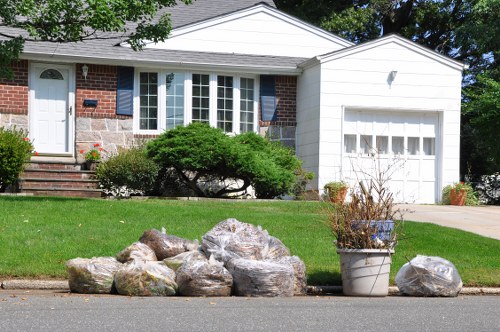 At Commercial Waste Barbican we are committed to creating an eco-friendly waste disposal area and a truly sustainable rubbish area across the Barbican and neighbouring City precincts. Our approach blends practical collection services with circular-economy thinking, ensuring that commercial recycling in the Barbican reduces landfill, supports local reuse and aligns with borough-wide waste separation schemes. We partner with businesses, property managers and local stakeholders to deliver consistent, measurable improvements in waste outcomes.
Our sustainability vision
Our vision for Barbican commercial waste and recycling is clear: reduce carbon emissions, increase material recovery and foster an efficient local network of reuse points. We support the boroughs' approach to waste separation — paper, cardboard, glass, metals, plastics and food waste are separated at source where possible — and we help implement practical separation systems for offices, shops and cultural venues. Separation at source dramatically improves recycling rates and reduces contamination in mixed recycling streams.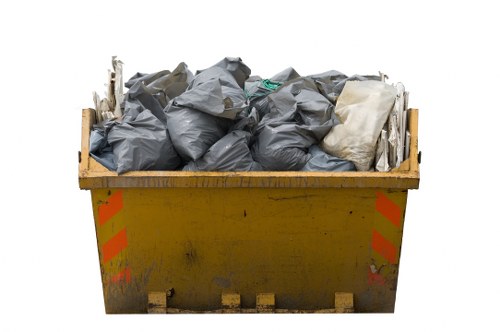 We have set a bold recycling percentage target: 70% by 2030 for all commercial clients in the Barbican precinct. This target is backed by a staged plan of improvements: better segregation, retailer and tenant engagement, on-site compaction and baling where appropriate, and regular performance reviews. To achieve this target we benchmark monthly tonnages, contamination levels and service frequency to deliver continuous improvement across the commercial recycling landscape.
Local infrastructure is a key part of delivering a successful eco-friendly waste disposal area. We coordinate collections to nearby transfer stations and consolidation hubs that can accept separated streams and route them to material recovery facilities. Working with local transfer stations reduces journey times and carbon emissions, and increases the speed at which materials enter reuse and recycling chains. Where possible we use City of London transfer points and neighbouring borough depots to minimise road miles and hand-offs.
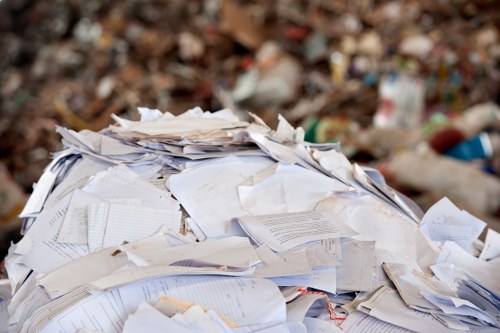 Partnerships with charities and reuse organisations form another cornerstone of our sustainable rubbish area model. We work closely with community groups, social enterprises and charities to divert textiles, furniture and surplus food from the waste stream. These partnerships include donation chains for office furniture, clothing and small electricals, ensuring items are repaired, repurposed or redistributed rather than destroyed. Such collaboration supports local social value and extends the life of items that would otherwise become waste.
Low-carbon logistics and operational practices
Our fleet strategy prioritises low-carbon vans and efficient routing to reduce emissions from collections. We deploy electric vans where charging infrastructure is available and hybrid or Euro-6 low-emission vehicles where appropriate, with monitored idling reduction and driver training programmes. Key operational measures include:- Optimised collection rounds to avoid unnecessary trips and reduce vehicle miles.
- Use of consolidation points and bulk lifts to lower truck movements.
- Investment in electric and low-emission vehicles as fleet renewals occur.
To support our recycling percentage target and borough-style separation, we offer tailored waste audits and site plans that map waste flows and recommend segregation points. Audits identify opportunities to increase capture of high-value recyclables — paper and cardboard baling for example — and to set up food waste collections where buildings have catering operations. We emphasise practical solutions such as shared waste rooms with labelled containers, clear signage and tenant training to reduce contamination.
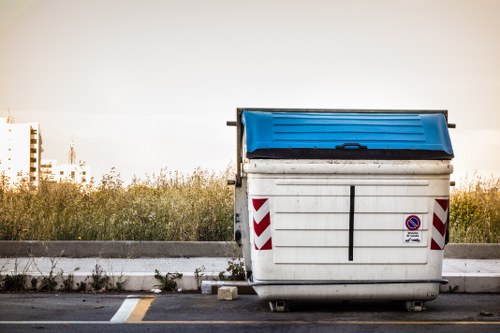 We also invest in staff training, client workshops and clear on-site instructions to maintain standards. Our crews are trained in material identification and contamination mitigation, and our customer-relationship teams liaise with facilities managers to align on pick-up times, storage requirements and emergency responses. Consolidation and scheduling are designed to protect local air quality: fewer trips, fuller loads and quieter vehicles contribute to the low-emission profile of our services.
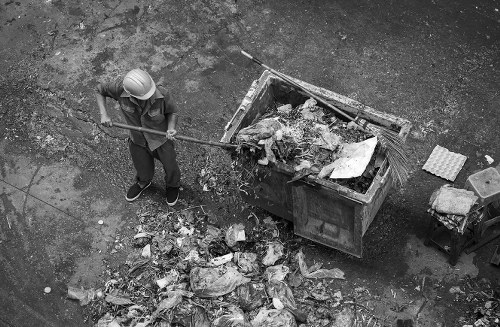 The long-term goal for commercial recycling in the Barbican is to create a resilient, low-carbon system that supports the local economy and natural environment. We champion reuse networks, charity partnerships and transfer-station coordination to maximise resource recovery. By implementing a mix of on-site separation, targeted reuse programmes, and a low-carbon van fleet, we aim to meet and exceed the recycling percentage target while providing practical, reliable services for businesses. Commercial Waste Barbican is committed to continuous improvement, transparency in reporting and collaboration with borough authorities to drive sustainable outcomes across the precinct.
